☎ (945) 375-4950
Water Extraction · Dallas, TX

Water Extraction Dallas: Standing Water Out, Floors Ready to Dry

Every gallon that stays in your carpet is a gallon soaking deeper into pad, subfloor and baseboards. That is why water extraction dallas homeowners call for is not mopping with a bigger machine. It is measured removal: pumps for depth, weighted extraction that squeezes carpet pad dry, and meter checks that prove what is left before drying begins.

Pumps and truck-mounted powerCarpet, pad and hard floorsMeter-verified before drying

What To Tell Us When You Call

Four details that help our Dallas crew bring the right equipment and get drying started sooner.

☎ (945) 375-4950
Your Dallas Address and ZIP

Street address and ZIP code, so the crew closest to your home is the one that heads out to you.

Where the Water Came From

A burst pipe, a water heater, an appliance, the roof, a sewer line, or storm water through a door.

Is It Still Coming In?

If water is still flowing, stay on the line: we will talk you through shutting it off safely.

Which Rooms Are Wet

The rooms affected, whether floors, walls or ceilings are wet, and roughly how long it has been that way.

Quick Answer

Extraction is the removal of bulk water: standing water pumped or vacuumed out, carpet and pad squeezed dry with weighted tools, and hard floors cleared so drying can start. It is the first and fastest step of any restoration, and the one that decides how much material can be saved. Done properly in the first hours, it turns a multi-room loss into a drying job. Delayed, the same water becomes a demolition and mold problem.

01 · Start Here

Why Does Extraction Decide How the Whole Job Goes?

Drying equipment can only evaporate water at a fixed rate. Every gallon removed mechanically in the first visit is a gallon the dehumidifiers never have to chase, which is why a thorough extraction pass can cut days off a job and keep flooring and drywall on the save list instead of the removal list.

On the written scope this step usually appears as water removal dallas residents can check against the crew's own log: gallons out, rooms cleared, and the moisture readings taken the moment extraction ends. Those three numbers are the baseline the whole restoration is judged against, by you and by your insurer.

02 · How It Works

How Does a Crew Extract Water, Room by Room?

1

Source Confirmed Off

Extraction never starts against a live leak. The crew confirms the supply is shut and the inflow has stopped, so the water being removed is all the water there will be.

2

Truck-Mounted Extraction

Deep standing water is pumped first, then a truck-mounted extraction unit pulls the load that portable machines leave behind in carpet and pad, room by room.

3

Weighted Carpet Passes

A weighted tool rides the carpet and squeezes pad water up where suction alone cannot reach it. This pass is what saves carpet that looks ruined to everyone else.

4

Hard Floors Cleared

Tile, laminate and hardwood are squeegeed and vacuum-extracted, with edges and grout lines checked, because hard floors hide water at their seams and underneath.

5

Meter Check, Then Drying

Readings at walls, baseboards and subfloor confirm what extraction achieved and what drying still owes. Only then is the drying equipment placed and the clock started.

03 · Where It Hides

Where Does Standing Water Hide After a Dallas Leak?

In the Carpet Pad

The pad under Dallas carpet acts like a sponge with a lid on it. The carpet face can feel almost dry while the pad below is still releasing water into the subfloor for days.

Under Hardwood and Laminate

Water runs along the slab and pools under floating floors, cupping boards from below. Extraction at the edges and early drying are what keep a floor from being torn out.

Inside Wall Cavities

Baseboards wick water upward and pass it into drywall and insulation. A room can look extracted while the bottom of every wall is still wet, which is why meters, not eyes, close this step.

On the Slab Itself

Most Dallas homes have no basement, so water spreads across the slab and into every adjoining room at floor level. Extraction has to chase the whole footprint, not just the room where the leak started.

04 · The Measure

Water Extraction Dallas Crews Measure in Gallons and Readings

Anyone can say a room looks dry. A professional extraction is proved with numbers: how much water came out, what the moisture meter read at the wall base before and after, and what the drying plan still has to achieve. That proof protects your home from hidden mold, and it protects your claim from questions later.

05 · The Paper Trail

Water Removal Dallas Crews Log by the Gallon

The log is not paperwork for its own sake. Adjusters approve what they can verify, and a gallon count with dated readings is verifiable in a way that "we dried it well" is not. Good water removal dallas documentation is what turns a stressful weekend into a claim that moves.

Your copy of the scope and readings also protects you at the repair stage: everyone can see exactly which rooms were extracted, which materials were already wet on day one, and where the drying goals were set.

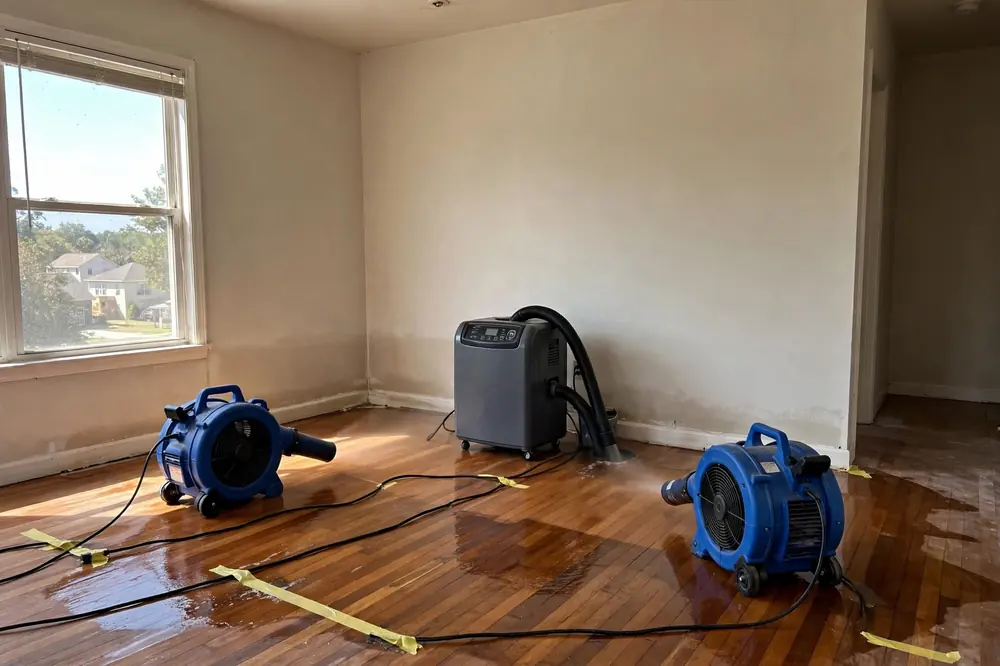
Commercial air movers and a dehumidifier set right after extraction in a Dallas home
Drying equipment is placed the same visit, as soon as extraction passes its meter check.
06 · Insurance

Will Insurance Pay for Extraction?

Extraction is mitigation, the step insurers expect you to take immediately to stop a covered loss from growing, and sudden losses like burst pipes and appliance failures are the ones policies are built for. The full picture of what a job costs and who pays what is in our guide to what drives the cost of a Dallas restoration.

07 · Real Questions

Questions Dallas Homeowners Ask Us

How long does water extraction take in a Dallas home?

Most single rooms take one to three hours of active extraction, and a whole ground floor can take most of a day when several rooms are involved. Depth decides it: an inch of standing water over a large area is thousands of gallons, and carpet pad releases its water slowly even to strong equipment. Drying starts the same visit, right after extraction, and the drying itself runs for days while readings are checked.

What is the difference between extraction and drying?

Extraction removes bulk water you can see and pump or vacuum out: standing water, soaked carpet, saturated pad. Drying removes the moisture you cannot see, the water that wicked into drywall, subfloor, framing and cabinets. Extraction is measured in gallons and hours. Drying is measured in moisture readings over days. Skipping proper extraction makes drying slow and expensive, and skipping drying after extraction leaves hidden moisture behind.

Can a shop vac or a home carpet cleaner do the same job?

For a few gallons from a small spill, a shop vac helps and is worth doing right away. For a room or more, home equipment runs out of power and patience long before the pad does. Carpet pad can hold several gallons per square yard, and a home machine cannot pull that load or tell you what is still wet inside the wall. The bigger risk is false confidence: the surface feels dry while the structure is still soaked.

Will my carpet survive, or does it all have to come out?

Clean water caught early is the best case: carpet often dries in place after weighted extraction, while the pad underneath is sometimes replaced because it is cheap, holds odor, and slows drying. Grey or black water changes the answer, because contaminated porous materials are removed for health reasons, not looks. The crew decides from the water category and meter readings, and documents whatever comes out for the claim.

Do you always remove baseboards and drill walls?

No. Baseboards come off and small drying holes are drilled only when readings show moisture trapped in the wall cavity, and only where it speeds drying enough to save the wall. Many losses dry from the surface with air movement and dehumidification alone. When holes are needed they are small, low, and documented, and they are part of the repair list at the end of the job.

When does the drying equipment get set?

The same visit, as soon as extraction passes its first meter check. Air movers and dehumidifiers go in while the rooms are open and the crew is present, because every hour between extraction and drying is an hour moisture spends moving deeper. Equipment then runs continuously and is checked at follow-up visits until readings reach the dry standard.
Service Areas

Dallas Neighborhoods and ZIP Codes Covered

Our crews run across Dallas, from Downtown and Uptown to Lake Highlands, Oak Cliff, Pleasant Grove and the Park Cities side of the city, covering all 66 Dallas ZIP codes from 75201 to 75287.

Downtown DallasUptownDeep EllumHighland Park AreaUniversity Park AreaLakewoodLake HighlandsWhite RockPreston HollowNorth DallasOak CliffBishop ArtsKessler ParkEast DallasSouth DallasWest DallasNorthwest DallasFar East DallasPleasant GroveRed Bird
Keep Reading

Related Help From the Same Crew

What a Restoration Costs in Dallas →

The five factors that build the final number, and why the honest figure comes after readings, not on the phone.

Burst Pipe Damage →

A pipe lets go inside a wall or ceiling. Here is the order of work from shutoff to dry.

Full Restoration, Start to Finish →

Extraction is step one. See the whole process our Dallas crew runs on the main page.

Standing Water Right Now? Make the One Call That Starts Everything.

If rooms are still wet, the fastest way to shrink the whole restoration is to start water extraction dallas crews can measure today: one call, and the water starts leaving instead of spreading.

☎ Call (945) 375-4950