Standing in a wet room, everyone wants one number. The honest truth about water damage restoration cost dallas families face is that the figure is built in the room, not on a website: from how much water, what it soaked, and how long it sat. This page shows you exactly how that number is built, so you can judge any scope put in front of you.
What To Tell Us When You Call
Four details that help our Dallas crew bring the right equipment and get drying started sooner.
☎ (945) 375-4950Street address and ZIP code, so the crew closest to your home is the one that heads out to you.
A burst pipe, a water heater, an appliance, the roof, a sewer line, or storm water through a door.
If water is still flowing, stay on the line: we will talk you through shutting it off safely.
The rooms affected, whether floors, walls or ceilings are wet, and roughly how long it has been that way.
The cost of a restoration job is built from five factors: how much water and area is involved, the category of the water, the materials it soaked, how long it sat before mitigation, and how much repair follows the drying. That is why an honest figure only exists after moisture readings and a written scope. Anyone quoting a firm price without entering the home is guessing, and the guess is rarely in your favor.
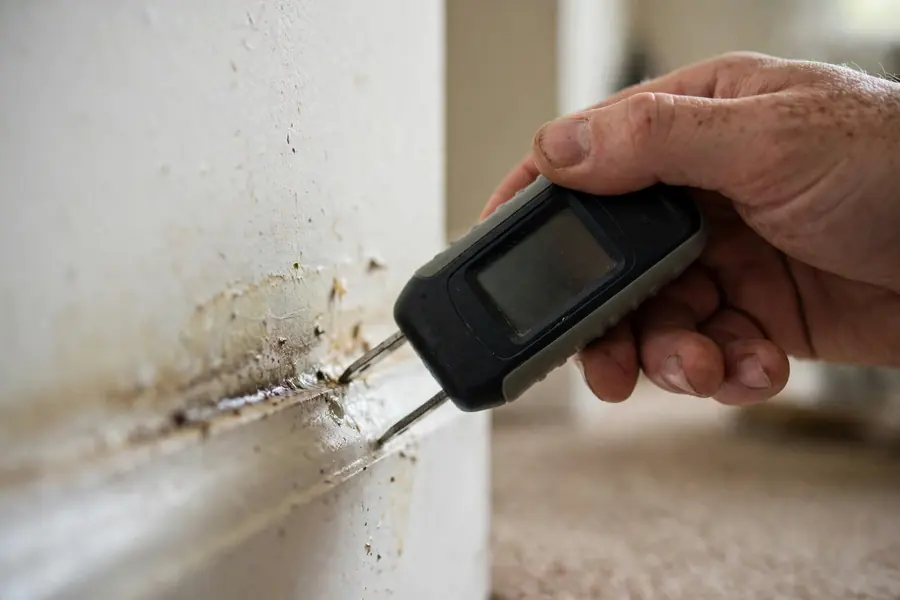
Because the three facts that move the number most, water category, affected materials, and hidden moisture, are invisible from a phone call. Two kitchens with the same puddle can be entirely different jobs once a meter touches the wall.
This is also why the water damage restoration cost in dallas homes is best understood as a method, not a menu. Readings first, scope in writing second, work third. Any company that reverses that order is asking you to carry the risk of their guess.
A final invoice separates into two parts: mitigation, meaning extraction and drying, and the water damage repair cost dallas homeowners see afterward for drywall, flooring and cabinets. These five factors drive both parts.
More water across more square feet means more extraction, more equipment on the floor, and more days of drying. Size is the base every other factor multiplies.
Clean supply water is the simplest to handle. Grey water adds sanitizing. Black water adds containment, protective equipment and disposal of materials that cannot be made safe.
Carpet dries fast and cheaply. Hardwood, plaster and built-in cabinets dry slowly, sometimes with specialty equipment, and cost the most to save or to replace.
Hours matter. Water caught the same day usually stays a drying job. Water that sat for days adds mold treatment and turns savable materials into removals.
Drying alone is one figure. Replacing drywall, flooring, trim and cabinets is another, and it is priced from the documented list of what actually had to come out.
A trustworthy scope reads like a map of your own home: rooms named, materials listed, readings attached, and each line tied to work you can watch happening. If a figure cannot be traced back to a wet material and a dated reading, it is not a scope, it is a guess with a signature line.
Mitigation is the cheapest money in the whole event. Fast extraction keeps water out of wall cavities, holds the mold window shut, and keeps flooring on the save list. Every one of those outcomes removes lines from the final invoice.
Delay does the opposite at every step: the water damage restoration cost in dallas jobs grows as moisture spreads to new materials, as drying stretches, and as repairs replace what drying would have saved. The clock on the wall is a line item, whether it is printed or not.

For sudden and accidental losses, the restoration bill above your deductible is commonly the insurer's part, which is why the out-of-pocket question is usually about the deductible and the exclusions, not the whole job. Gradual damage and outside flood water are where claims fail, and both are questions of documentation and timing.
The repair portion is reviewed against the drying record: which materials were verifiably wet, which were saved, and which had to come out. A clean drying log makes that review short. A missing one makes it an argument, and arguments are where repair approvals go to shrink.
There is no honest single figure, because the number is built from your rooms, not from a chart. A small clean-water loss caught in the first hours costs a fraction of a large or contaminated loss that sat for days, and both are called the same thing. What can be promised is the method: readings and a written scope first, so the figure you approve is the figure the job is run against.
Because the person quoting has not seen the water category, the affected materials, or a single moisture reading, and those three facts move the number more than anything you can describe. A confident phone price is either padded to protect the company or low to win the job, with the difference collected later. A short inspection replaces the guess with a scope you can hold the crew to.
For sudden and accidental losses, a burst pipe, a failed water heater, an appliance overflow, homeowners insurance commonly carries the restoration cost above your deductible. Gradual leaks, deferred maintenance and outside flood water are the usual exclusions. What decides real cases is documentation: photos, readings and a dated scope from day one, which is standard practice on our jobs.
On most scopes, yes, because they are different work done at different stages. Mitigation (extraction, drying, sanitizing) stops the loss. Repairs (drywall, flooring, cabinets, paint) rebuild what had to come out. Keeping them separate is what lets an adjuster approve each part on its own evidence, and lets you see exactly where your money went.
Time. Water that sits for days adds mold treatment, turns savable materials into removals, and stretches drying. The same loss handled in the first hours is routinely the cheapest version of itself. After time, the biggest drivers are contaminated water and high-end materials like hardwood that need specialty drying.
Stop the source, start extraction the same day, and do not run home fans on a large loss and call it handled. Keep receipts and photos, open the claim early, and get the scope in writing before work beyond mitigation begins. Those five habits do more for your final number than any negotiation after the fact.
Our crews run across Dallas, from Downtown and Uptown to Lake Highlands, Oak Cliff, Pleasant Grove and the Park Cities side of the city, covering all 66 Dallas ZIP codes from 75201 to 75287.
The mitigation step that decides more of the final number than any other. See how it runs.
The most common sudden loss in Dallas homes, and the one insurance is built for.
The complete process, from first call to final moisture check, on our main page.
If you want the real figure for your home instead of a guess, it starts with readings and a written scope: that is the water damage restoration cost dallas homeowners can actually verify, and one call starts it.
☎ Call (945) 375-4950